Fiber Cement Siding Repair
Most of our repair calls start the same way: a homeowner assumes a handful of damaged boards means the whole exterior needs to come off. Usually it doesn’t. This page is about what repair actually involves, how we figure out if it’s enough, and what happens when it isn’t. We see this pattern most often in established pockets like Watters Crossing and Quail Run, where original siding is old enough to need a real assessment rather than a guess. We also do a fair amount of color-match repair work in Twin Creeks, where stone-and-siding facades make a clean match trickier, and in Montgomery Farm, where homes near the Watters Creek retail district tend to prefer a full elevation match over a visible patch. In Star Creek, most of our repair calls are for a single brick-adjacent gable or porch accent rather than a full wall, and in Ridgeview Crossing we spend extra time checking flashing at gable and roof-valley intersections, since that is usually where a leak traces back to.
What We’re Actually Diagnosing
Fiber cement damage falls into a small number of recognizable patterns, and the pattern usually tells us most of what we need to know before we ever touch a tool. A board doesn’t just “look bad” — it’s telling you something specific about what happened to it, whether that’s a single storm, a decade of sun, or a mistake made the day it went up.
How Individual Board Repair Actually Works
This isn’t a full re-side scaled down — it’s a genuinely different job, and doing it well means being careful with the boards you’re not replacing, not just the one you are.
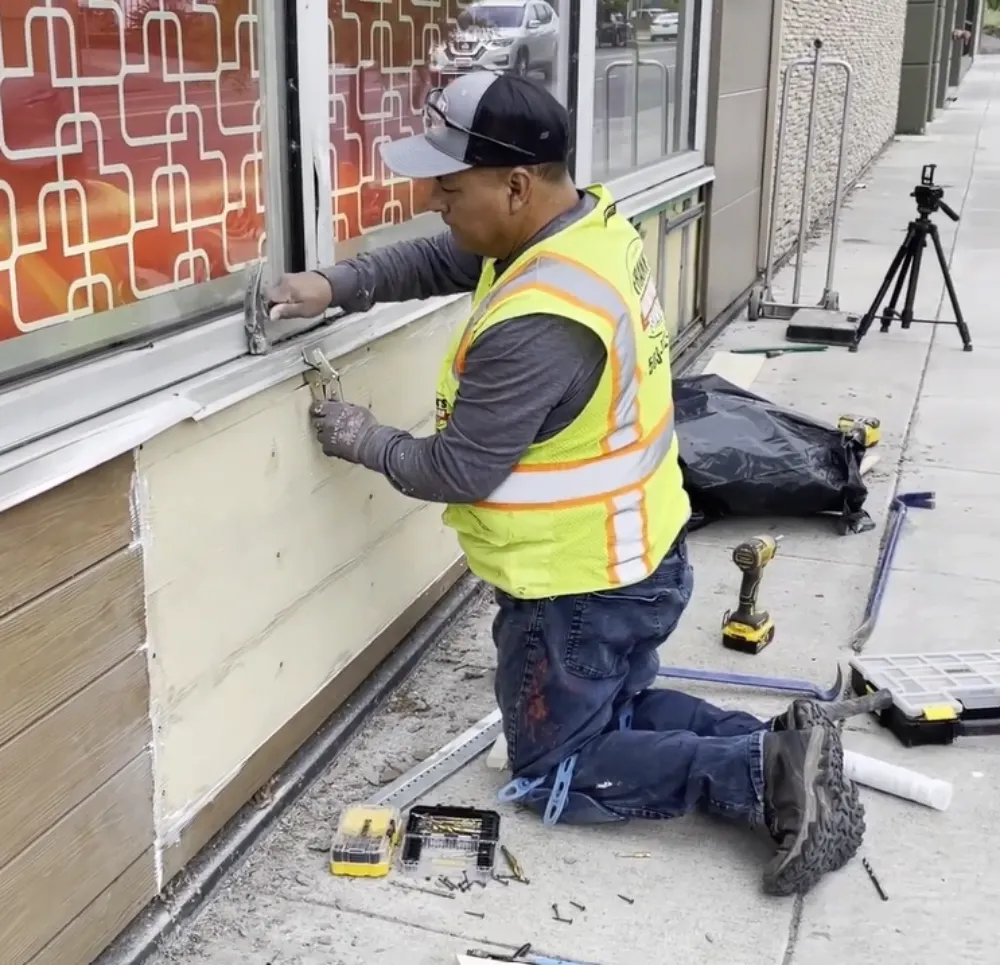
Locate and Remove the Damaged Board
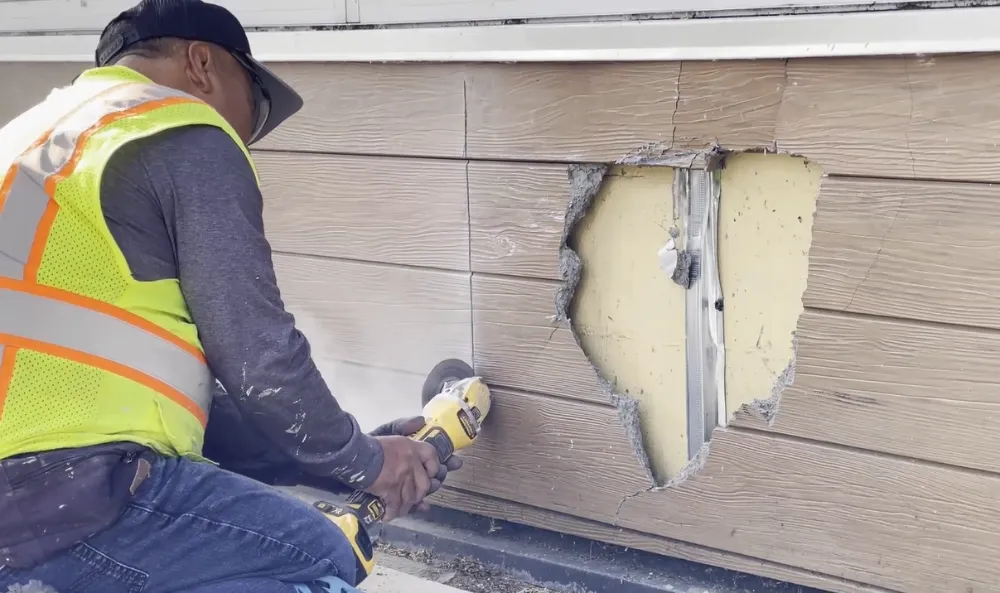
Fiber cement is nailed into studs, so removal means finding and pulling the correct fasteners without disturbing the boards directly above and below it — easy to get wrong if you’re rushing.
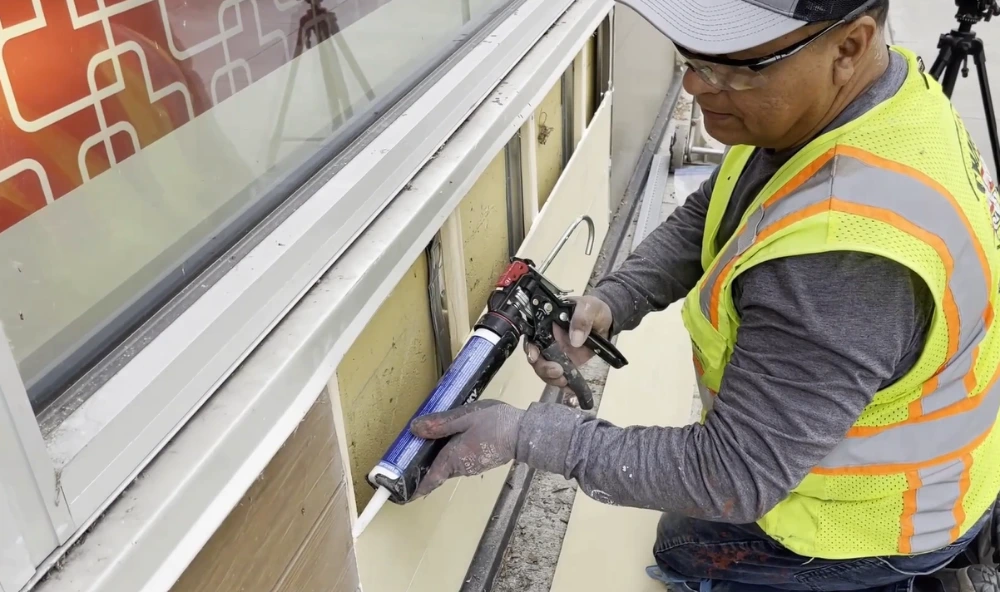
Inspect What Was Hiding Behind It
Every repair is a free look at the house wrap and flashing in that one section. We check it before closing the wall back up, since it’s the only chance we’ll get without opening it again.
Cut and Fit the Replacement
Wet-cut or sheared outdoors with proper dust control. Fiber cement dust contains crystalline silica, which is a genuine respiratory hazard at the cutting stage even though the cured board sitting on your wall poses zero ongoing risk.
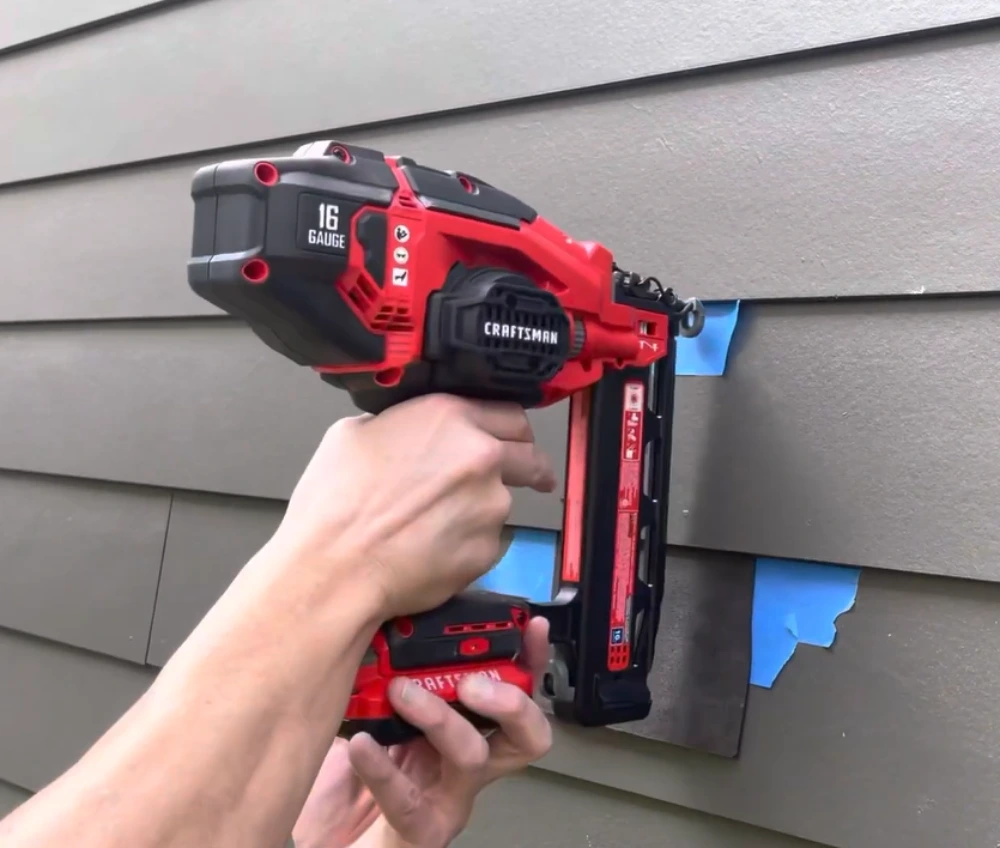
Fasten to the Same Spec as New Installation
Correct nail depth and placement, proper expansion gaps at the ends — a repair that skips these just fails again in a few years, same as a bad original install would.
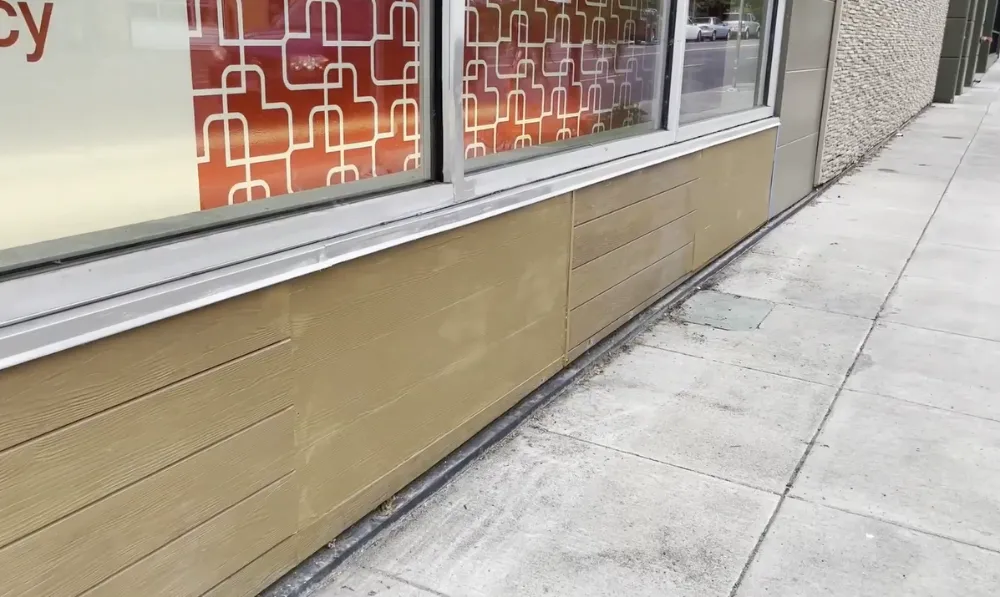
Prime and Color-Match
Cut edges get primed before installation. Matching an existing factory finish or an aged field-painted color takes a careful eye on-site — not a guess made from a paint chip in a showroom.
On the silica dust question specifically: the board already on your wall is completely inert — there’s no ongoing health risk from siding sitting on your house. The hazard is entirely at the cutting stage. Any contractor doing repair work on your home should be wet-cutting or using shears with proper PPE outdoors, not dry-cutting in your garage.
When Repair Isn’t Enough
If the damage pattern points to a systemic installation error rather than isolated storm impact, or if we find moisture damage to the sheathing behind more than one isolated section, repair stops being the smart move — you’d just be fixing the same failure mode over and over instead of once. We’ll tell you this directly during the assessment, not after we’ve already started work we don’t expect to hold.
Quick Read: Repair or Replace?
Not sure which one describes your situation? That’s exactly what the on-site look settles — no guessing from photos.
Get an Honest Read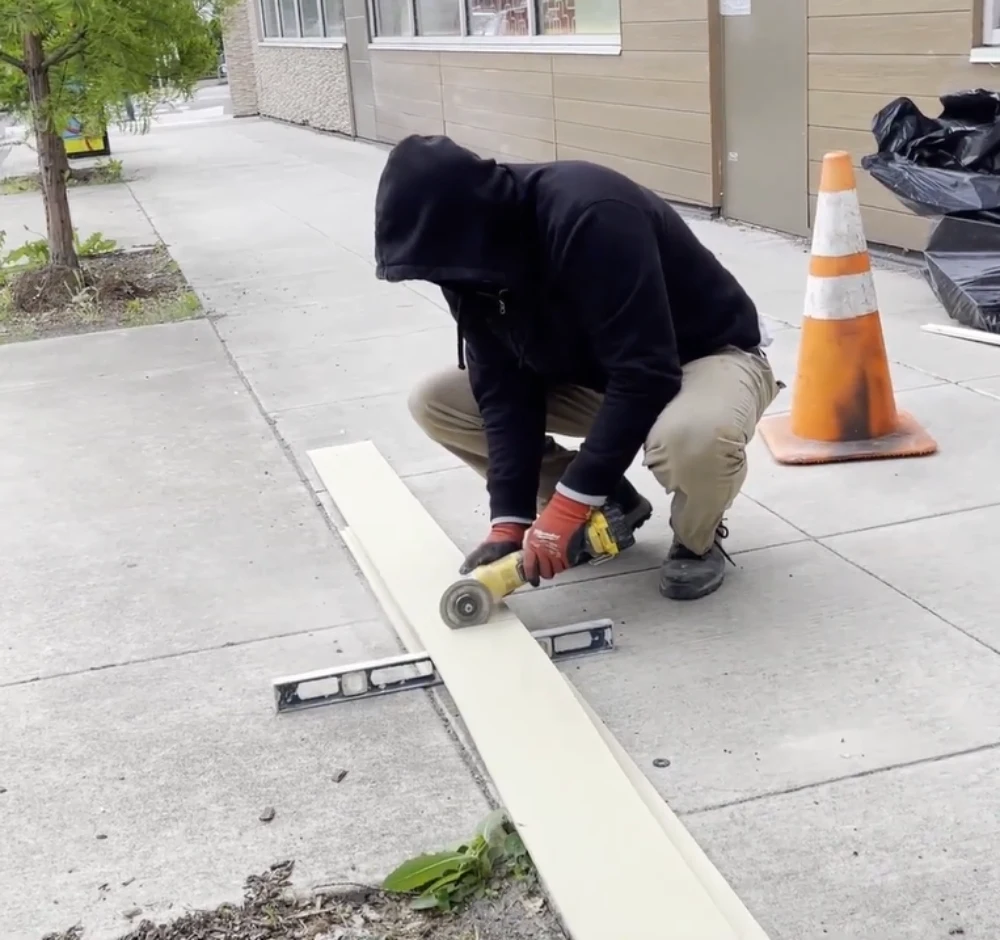
Reading the Damage Pattern
Four patterns cover most of what we see on a repair call — here’s what each one is actually telling you.
Localized, Roughly Circular Cracking
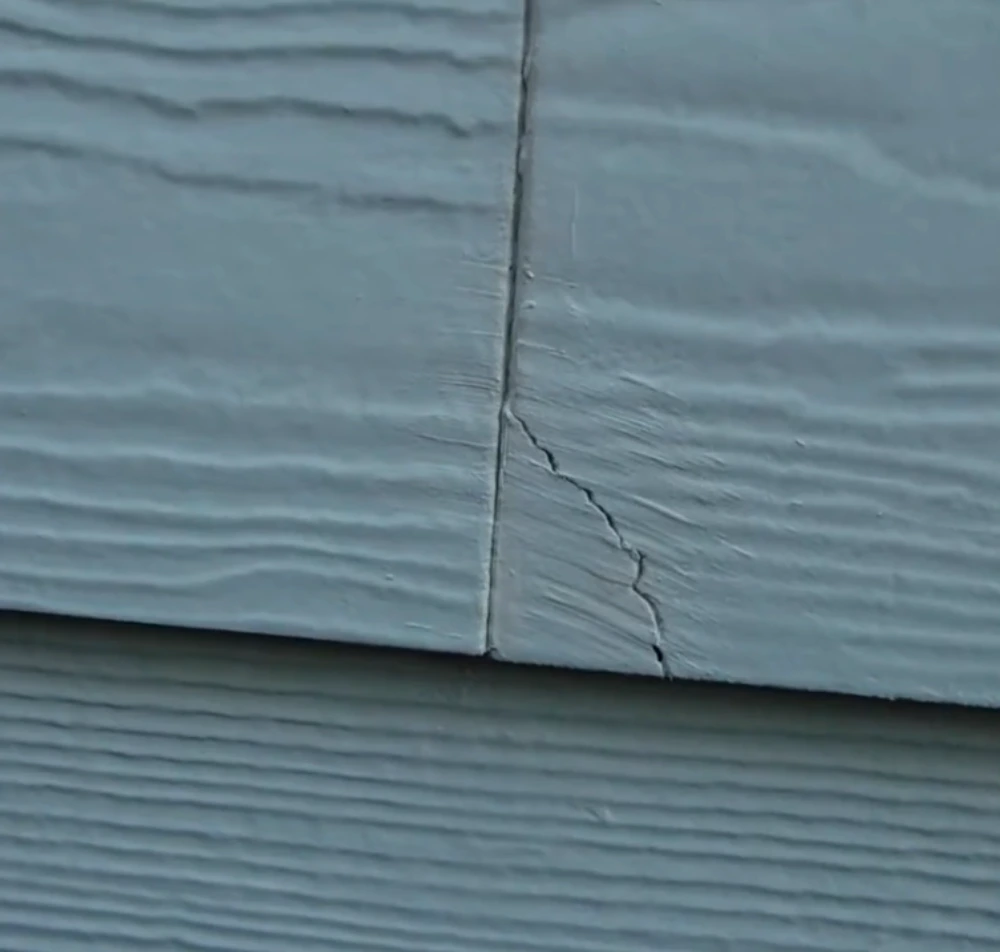
Almost always hail impact — see our storm damage repair page for insurance documentation help. Repairable board-by-board in most cases, since the damage doesn’t usually indicate an underlying installation or moisture problem — the board was fine until the storm hit it.
Straight-Line Cracking Along Nail Rows
Points to an installation error — most often face-nailing where blind-nailing was specified, or a missing expansion gap. Worth a fuller inspection before spot repairs, since more boards may be at risk on the same wall.
Gaps at Butt Joints or Corners
Usually means the siding wasn’t left room to expand and contract, or aged caulking needs attention — done correctly, that joint uses concealed flashing, not exposed caulk that eventually opens up.
Soft Spots or a Musty Smell Near the Base
Signals possible moisture intrusion behind the siding — a different repair scope entirely, one that usually means opening the wall to check the sheathing before anything gets closed back up.
Real Questions We Get on Repair Calls
“One board is cracked but the rest of the wall looks fine. Do we really need a full inspection?”
We’ll still walk the whole exterior, even for a single-board job, because cracking patterns aren’t always visible from the ground and we’d rather catch a second problem now than have you call back in six months about a wall we never looked at.
“Can you match the color, or will the repaired board always look different?”
Usually yes, close enough that it’s not obvious from the street — but an exact match on a factory-finished (ColorPlus) board that’s faded for ten years is genuinely harder than matching a field-painted wall. We’re upfront about that difficulty before we start, not after.
“A previous contractor caulked over our butt joints instead of using flashing. Is that actually a problem?”
Yes, and it’s one of the more common issues we find during repair calls. Caulk shrinks and eventually opens a gap that’s hidden until it’s already let water in behind the board. We replace it with proper flashing as part of any repair that touches that joint.
“How do we know if it’s worth repairing versus just doing a full re-side while you’re here?”
If the damage is isolated and the rest of the wall checks out during inspection, repair is almost always the better value — a full re-side is a much bigger cost for a problem that doesn’t require it. We’ll only recommend replacement if the inspection actually shows a reason to.
Recent Repair Work
Frequently Asked Questions
Is fiber cement siding safe to cut and repair?
The cured board on your wall is completely inert — no ongoing health risk from siding you’re not actively cutting. The hazard is entirely at the cutting stage, from silica dust. Any contractor doing repair work should be wet-cutting or using shears with proper PPE outdoors.
How much does fiber cement siding repair cost?
Repairs are priced per board or per section, not by the whole-house square-foot rates used for installation or replacement — see our full cost breakdown for exact ranges. Most single-board and isolated repairs are completed same-day.
Can you repair just one or two boards, or do you need to redo a whole wall?
Individual board repair is genuinely common and often all that’s needed. We only recommend a wider scope when the inspection actually shows a reason to — widespread installation errors or moisture damage — not by default.
Will the repaired area look different from the rest of the wall?
We color-match as closely as possible, but an exact match on old, faded, or factory-finished siding can be genuinely difficult. We’ll tell you honestly how close a match to expect before starting.
How long does a typical repair take?
Most single-board or isolated-section repairs are completed in a single day. Larger-scope repairs involving several walls get a specific timeline after inspection.
What if the repair reveals a bigger problem behind the board?
We’ll stop and talk to you before proceeding further. Sometimes a repair uncovers moisture damage or a wider installation issue that changes the scope — we don’t keep going without telling you first.
“We thought we needed the whole side of the house redone. Turned out it was four boards from a bad original install years ago. They fixed exactly those four boards, matched the color, and didn’t try to upsell us into anything bigger.”
Not Sure If You Need Repair or Replacement?
A short on-site look settles it — no obligation, and no push toward a bigger job than you actually need.
Call (888) 507-2627