
Fiber Cement Siding Replacement
Replacement means removing your existing siding entirely and starting over — not patching a section. It’s also the option we recommend least often relative to how often it gets quoted, because a full re-side isn’t always necessary. Here’s how we actually decide, and what happens once we do.
Why We Don’t Default to Replacement
A full re-side is the biggest invoice we can write for a siding project, which is exactly why we’re careful about recommending it. It comes down to how much of the wall assembly is actually affected, not just how much siding looks damaged from the ground. We inspect the whole exterior — every wall, not just the one you called about — before telling you which option actually fits your situation.
What “Full Tear-Off” Actually Means
Some crews will nail new siding directly over your old boards to save a day of labor. We don’t do that, and it’s worth knowing why. Whatever condition the old siding is hiding — a soft spot, a moisture pocket behind one section, degraded house wrap — stays hidden if you build over it. You end up with a wall that looks brand new for a year or two and then starts showing the same problem the old siding had, except now it’s buried under a fresh install and harder to diagnose. Full tear-off means the old material comes off completely before anything new goes up, so what’s actually there gets dealt with instead of covered up.
How We Scope the Job Before Anything Comes Off
We walk the exterior first and give you a written estimate based on what we can see — siding condition, trim complexity, square footage, access. That number is honest, but it’s also built on visible information, which is why we’re upfront that it can move once the old siding is actually off and we can see the sheathing underneath. Most of the time nothing changes. When something does turn up, we stop, show you what we found, and explain the cost difference before doing anything else — you’re never getting a surprise invoice for work you didn’t agree to.
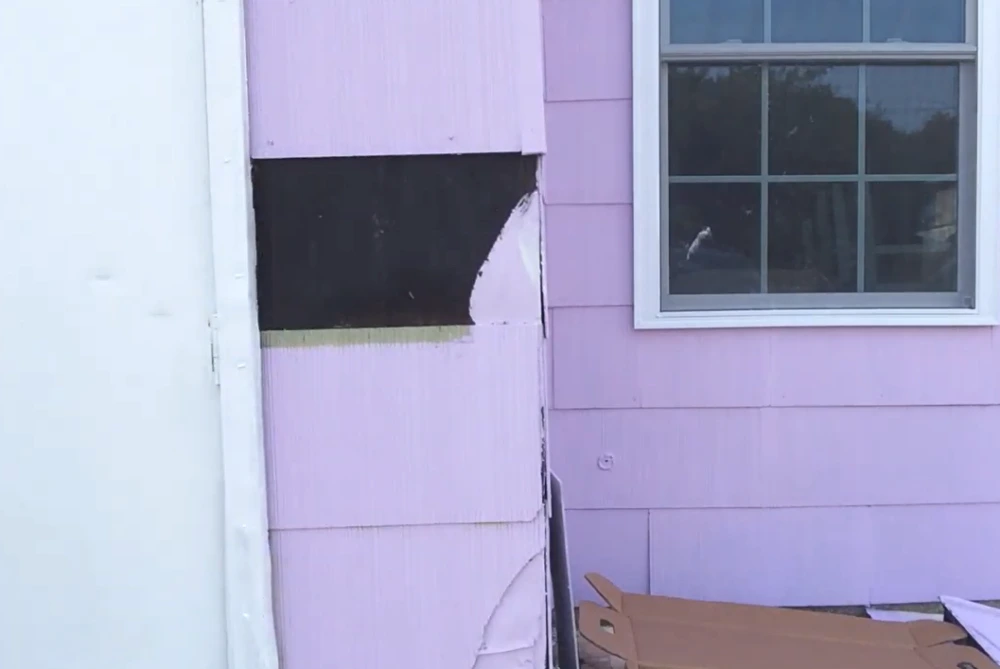
What Full Replacement Includes
Repair or Full Replacement: The Honest Version
We inspect first and recommend second — not the other way around.
Usually a Repair
A few boards cracked from a single event, with no underlying moisture issue. Fixable board-by-board without disturbing the rest of the wall.
Usually Full Replacement
Widespread installation errors — face-nailing across multiple walls, no expansion gaps anywhere, missing flashing at most joints. Problems keep resurfacing one board at a time otherwise.
What Actually Happens During a Full Replacement
Old Siding Comes Off
Entirely, before anything else happens.
Wall Inspected
House wrap and sheathing checked for moisture or rot.
Repairs If Needed
Sheathing fixed before new siding ever goes up.
Reinstalled to Spec
Correct clearances, fastening, flashing throughout.
Disposal & Walkthrough
Old material hauled off, every course checked with you.
What We Usually Find When We Tear Off Old Siding
This is also the reason a replacement estimate sometimes changes once the old siding is actually off — you can’t fully know what’s underneath until you look.
Degraded House Wrap
Common on homes from the early-to-mid 2000s. Original wrap that’s brittle or torn gets replaced as part of the reinstall, not patched over.
Missing or Failed Flashing
Especially around windows and at butt joints where a prior install relied on caulk instead of proper flashing.
Sound, Undamaged Sheathing
Genuinely the most common outcome — the wall assembly checks out fine, and the job stays on scope and on budget.
Real Questions We Get on Replacement Calls
“Why did our siding fail again just 7 years after it was installed?”
This is the scenario we see most often, and it’s almost always traceable to the original installation rather than the material aging early. Face-nailing where blind-nailing was specified, caulked butt joints instead of flashed ones, and missing expansion gaps don’t cause visible problems immediately — they cause problems on a delay. If you’re in this situation, documenting the cause can matter for a workmanship dispute with the original installer.
“Our quote went up after the old siding came off. Is that normal?”
It can be, and it’s exactly why we don’t quote sheathing repair before we’ve actually seen the sheathing. Most of the time the wall checks out fine and nothing changes. When it doesn’t, we stop and talk you through exactly what we found and why it changes the number, before doing anything else.
“Do we need to be out of the house during a full replacement?”
No — this is exterior work, and most homeowners stay in the house through the whole project. Expect some noise during removal and nailing, and we’ll coordinate around anything specific you need, like a home office window.
“What happens to all the old siding you remove?”
We haul it off as part of the project — you’re not left managing a dumpster or a pile of old boards in the driveway when we’re done.
Worth knowing upfront: most Allen master-planned communities require separate HOA architectural review approval of material and color before a full replacement starts — independent of the city building permit. We handle both applications as part of every replacement quote, so you’re not stuck navigating two separate approval processes on your own.
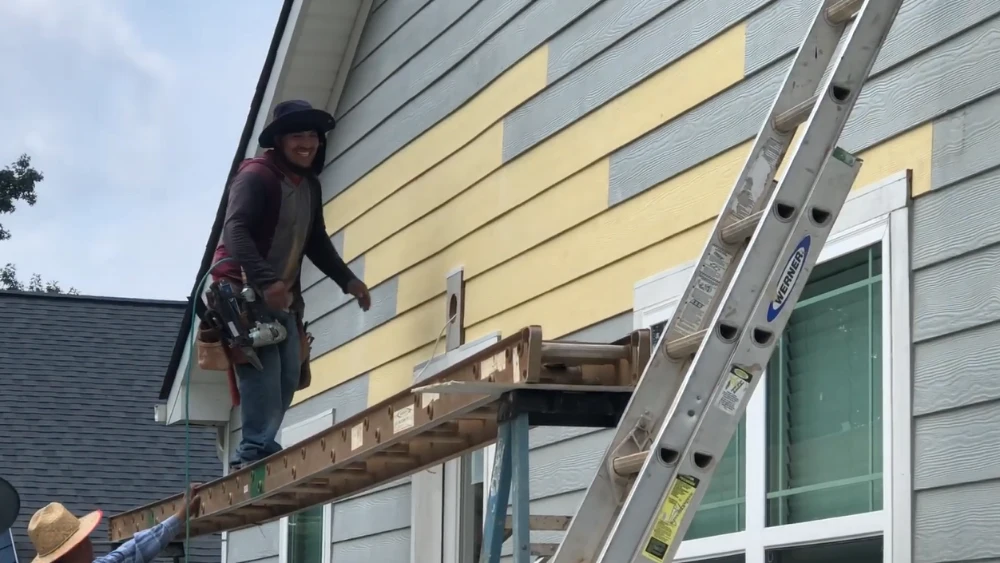
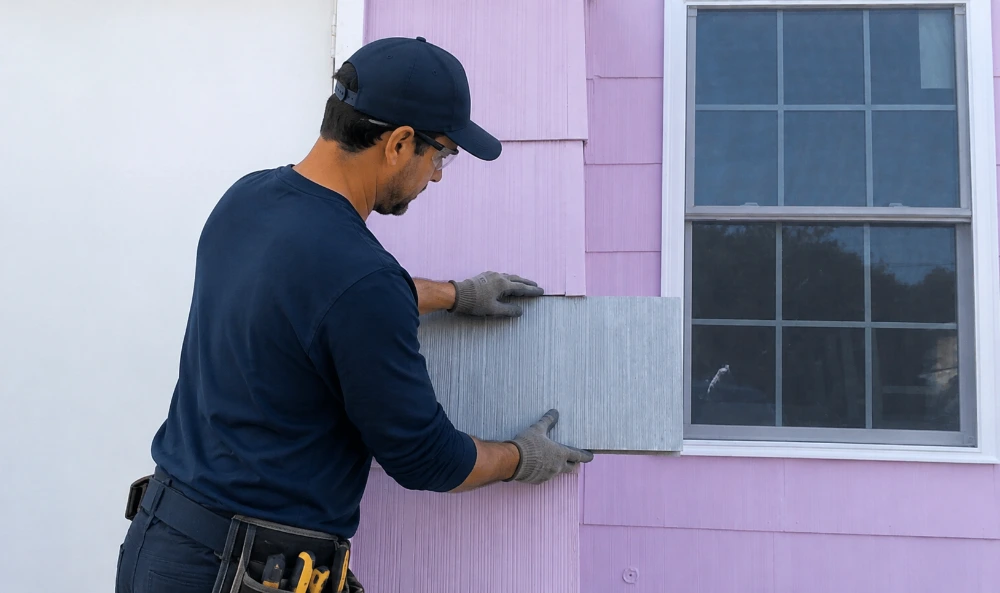
Recent Replacement Projects
Frequently Asked Questions
How do you decide between repair and full replacement?
It comes down to how much of the wall assembly is affected, not just how much siding looks damaged. Isolated damage with no moisture issue is usually a repair. Widespread installation errors or moisture damage across multiple walls usually means replacement makes more sense.
Does a full re-side require a city permit and HOA approval?
In most cases, yes, on both counts. A full exterior replacement typically requires a building permit, and most master-planned communities separately require HOA architectural approval of material and color. We handle both as part of every replacement quote.
How long does a full replacement take?
For a typical single-story home, plan on roughly 1–2 weeks depending on square footage and what we find once the old siding is off. Larger or multi-story homes, or projects that uncover sheathing repair, can run longer.
What does full replacement cost?
Because it includes removal, disposal, and sometimes sheathing repair on top of new material and installation, it typically runs at the higher end of our general fiber cement cost range. We won’t give a firm number without seeing the wall first — too much depends on what’s underneath the existing siding.
Will you match my home’s existing color if I’m only replacing part of it?
Full replacement is usually the whole exterior, so color matching to existing sections isn’t typically a concern — but if you’re doing a partial replacement alongside existing siding, we’ll walk through matching options during the inspection.
Do I need to be present during the work?
Not required, but we’ll walk the final result with you before calling the job finished, and we’re happy to check in throughout if you’d like updates as the project moves.
“Our siding was cracking everywhere just seven years after a full re-side from a different company. Once these guys pulled it off you could see exactly why — face-nailed boards with zero expansion gap anywhere. They redid it properly and even helped us document the original mess for a dispute with the first installer.”
Get a Free Inspection & Written Quote
We’ll tell you honestly whether you need a full replacement or just a repair — before you commit to either.
Call (888) 507-2627