Fiber Cement Siding Painting & Refinishing
Repainting fiber cement looks like a weekend job from the sidewalk. Done wrong, it’s one of the most common ways homeowners quietly shorten the life of siding that would’ve otherwise outlasted them. Here’s what the material actually needs, and what we check before we ever open a paint can.
The One Rule That Actually Matters
Fiber cement gets finished with 100% acrylic latex. That’s it, that’s the rule, and it’s non-negotiable. Oil-based paints and stains don’t flex the way acrylic does, and fiber cement moves a little — not much, but enough over a hot Texas summer and a cold snap in January that a rigid oil finish starts to crack at the edges before the color even has a chance to fade. We’ve stripped enough failed oil-based jobs off homes to know it’s not a maybe. If a bid you’re holding doesn’t say what paint they’re using, that’s the first thing to ask, because it’s the single biggest factor in whether your repaint lasts 12 years or 4.
The other detail people skip: primer matters more on fiber cement than on wood, especially on any bare cut edges or spots where the factory finish has worn through. Skip it and you’ll see the new coat “flash” — patches that dry a slightly different sheen than the rest of the wall, which reads as sloppy even when the paint job itself is technically fine.
What Prep Actually Looks Like, Wall by Wall
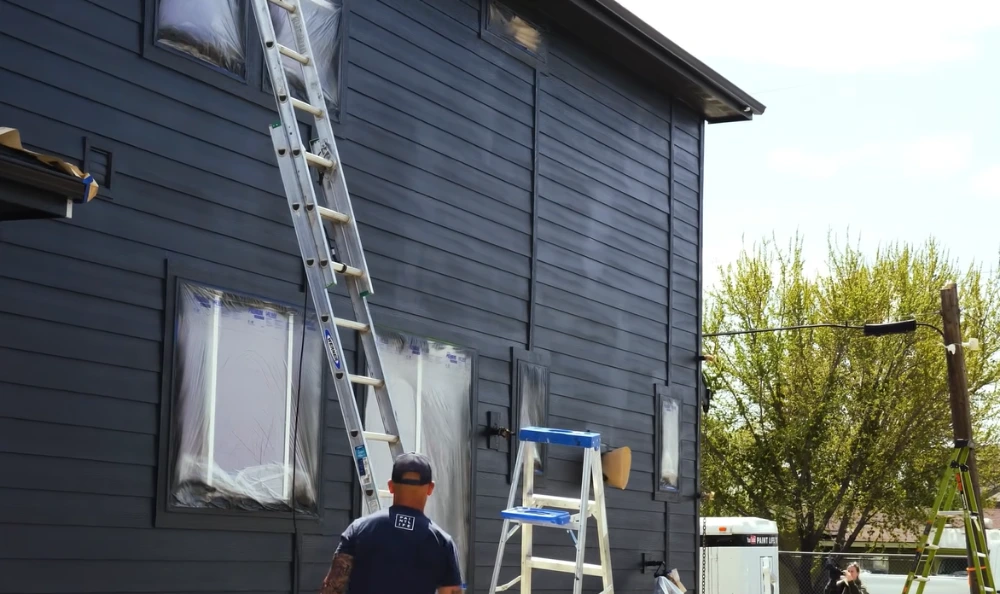
We wash before we ever touch a paint tray, and this step alone determines whether the new coat bonds or peels back inside two years. A proper wash at the right pressure — too high and you’ll etch the fiber cement surface, too low and you’re not actually removing anything — strips pollen film, chalking residue, and the fine dust that builds up on a wall facing a gravel drive or a mowed field. You can’t see most of it from the ground. You can absolutely see it if you paint over it, because that’s exactly where the new coat lets go first.
While the wall’s still wet and clean, that’s also the best time to actually look at it. Hairline cracks, a board that’s come loose at one corner, caulking that’s shrunk away from a window trim — all of it shows up clearer against a freshly rinsed surface than a dusty one. We flag anything structural before a single coat goes on and point you to a proper board repair first, because painting over a problem doesn’t fix it. It just hides it until the next person finds it, which is usually us, a few years later, explaining why the “new” paint job already looks tired.
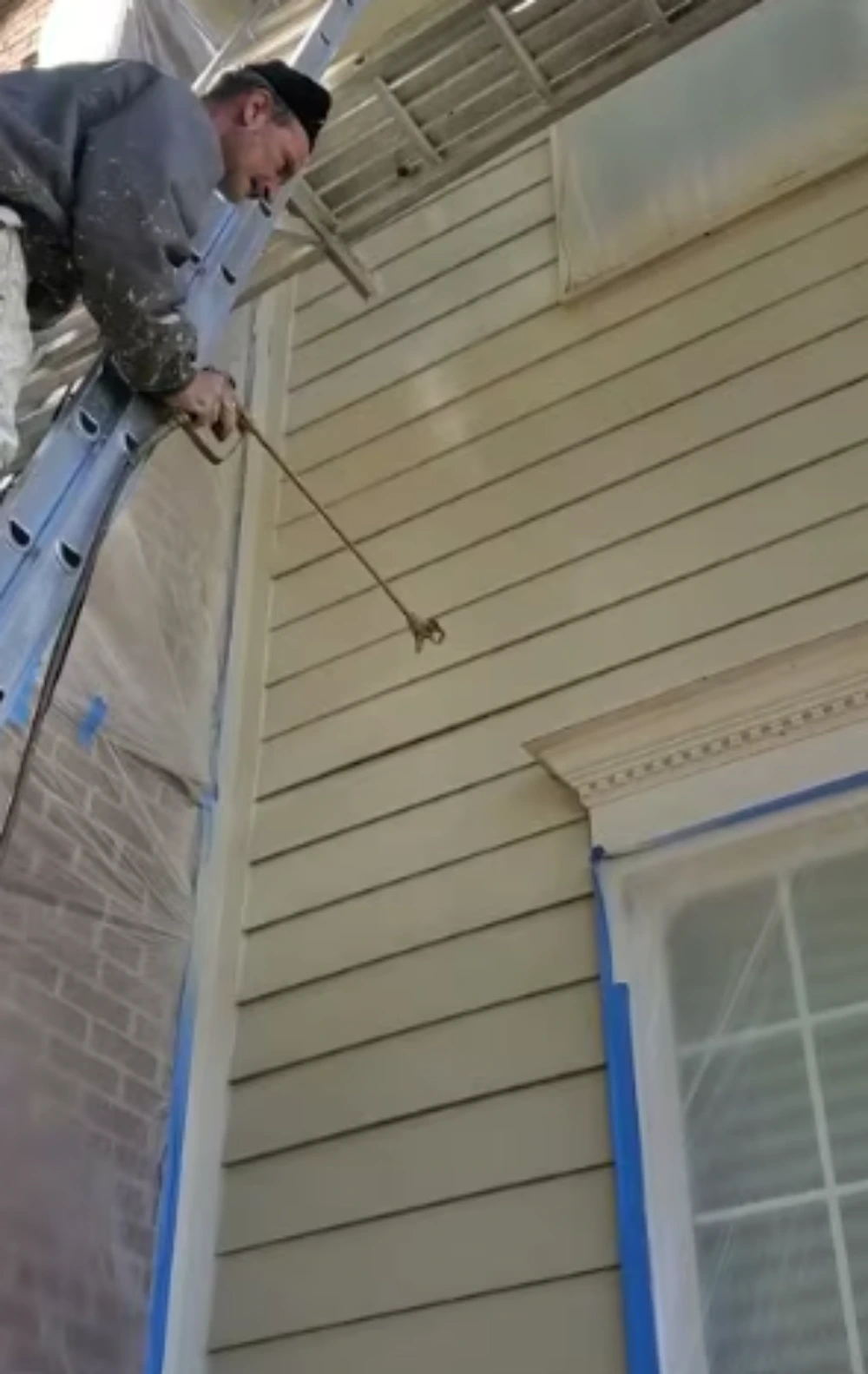
Bare edges and exposed nail heads get spot-primed. Then two coats of acrylic latex, with real dry time in between — not the “looks dry, good enough” version. Rushing that gap between coats is the single most common reason a repaint looks great at handoff and starts showing seams within two or three years.
Does Fiber Cement Siding Fade?
Yes, and how it fades tells you something useful. Give a wall fifteen-plus years of Texas sun and some color loss is just physics, especially on the south and west faces of a house where direct afternoon light does the most damage. That kind of fading is gradual and even — the whole wall shifts a shade lighter together, and it’s completely normal.
Blotchy or patchy fading is a different story, and it’s almost never the material’s fault. That pattern usually points back to an earlier repaint that wasn’t done evenly — inconsistent prep from wall to wall, a cheaper paint used in one section to save a few dollars, or a crew that sprayed one day and brushed touch-ups the next without matching sheen. If your siding has a factory finish (James Hardie’s ColorPlus, on boards that came with it), it’ll generally hold color longer and more evenly than anything field-painted, but even that isn’t permanent.
When a Fresh Coat of Paint Won’t Fix It
Repainting is cosmetic. It makes a tired wall look new, but it doesn’t do anything for a wall that’s actually failing underneath. If we see cracked boards, gaps opening at multiple joints, or soft spots alongside the faded paint, we’ll say so before we quote anything — because painting over structural problems just delays the conversation you’re eventually going to have anyway, at a higher cost once water’s had more time to get behind the wall. We’d rather lose a smaller repaint job today than have you call us in two years asking why the “new paint” is bubbling.
What Determines Your Price
Repainting is priced by wall area and current condition — not a flat per-house rate. A wall that’s clean and sound costs less to prep than one with peeling paint or repair work needed first.
Signs Your Siding Actually Needs Repainting
Recent Painting & Refinishing Work
Frequently Asked Questions
Can I use any exterior paint on fiber cement siding?
No — it needs to be 100% acrylic latex. Oil-based paints and stains don’t flex with the board’s minor movement and tend to crack well before the color even fades, especially through Texas heat swings.
How often should fiber cement siding be repainted?
Generally every 10–15 years for field-painted siding, though south- and west-facing walls with more direct sun tend to need it sooner. Factory-finished boards with ColorPlus technology usually stretch that interval further.
Can you match the color of my existing James Hardie ColorPlus finish?
We can get very close, but an exact factory match on a coated board is genuinely difficult since ColorPlus is baked on, not field-applied. We’ll show you a sample against your actual wall before committing to the full job.
Do I need to repaint or can I just clean the siding?
If the fading is even and gradual with no cracking or peeling, a proper wash sometimes buys you another season or two before a repaint is worth the cost. We’ll tell you honestly which situation you’re in during the assessment.
How long does a full exterior repaint take?
Depends on square footage and how much prep is needed, but most single-story homes run a few days once you account for wash time, dry time between coats, and weather windows. We’ll give you a real timeline after seeing the walls, not a generic estimate.
What time of year is best for repainting in Allen?
Spring and fall generally give the most reliable paint-drying weather — not too hot, not too much rain in the forecast. Painting during peak summer heat is possible but requires working around the hottest part of the day so the coat doesn’t dry too fast to bond properly.
“Our siding had that blotchy look where you could tell someone had touched it up unevenly a few years back. They explained why before we even signed anything — bad prep the first time around, not the material’s fault — and the new coat looks like one continuous wall instead of a patchwork.”
Get a Repaint or Refinishing Assessment
We’ll tell you honestly if repainting is the right move — or if it isn’t — before we quote anything.
Call (888) 507-2627