Storm & Hail Damage Siding Repair
North Texas sits inside a well-documented hail corridor, and storm damage repair is genuinely different work from routine siding repair — the inspection has to double as documentation, and the timeline usually has an insurance claim attached to it. Here’s exactly how we handle it, start to finish.
Why This Keeps Happening Across North Texas
A June 1, 2025 storm brought hail up to 3 inches in diameter across the DFW metro. A March 2026 storm produced hail over 3.5 inches across Central and North Texas, with regional insured losses estimated above $1.5 billion. If this feels like it’s happening more often than it used to, that’s not just perception — this region genuinely sits inside one of the more active hail corridors in the country, and it’s close to an annual pattern rather than a rare event. A post-storm inspection is worth doing even when nothing looks obviously wrong from the driveway, because hail damage on fiber cement often doesn’t announce itself the way a cracked windshield does.
What a Real Post-Storm Inspection Actually Involves
We walk the entire exterior, not just the wall you called about. Hail damage concentrates on whichever side of the house faced the storm, and it’s genuinely easy to miss if you’re only checking the wall you can see from the front yard. For every affected area, we document three things: the size of each impact, its exact location by course and elevation, and a running count of affected boards. Then we photograph it, dated, in the format adjusters are actually used to reviewing — not a handful of phone snapshots taken from ten feet away.
This documentation matters even if you end up not filing a claim. It’s the same record a future home inspector will want if the damage resurfaces as a bigger problem down the line, and it’s the difference between a five-minute adjuster conversation and a drawn-out dispute over what actually happened and when.
What Hail Damage Actually Looks Like on Fiber Cement
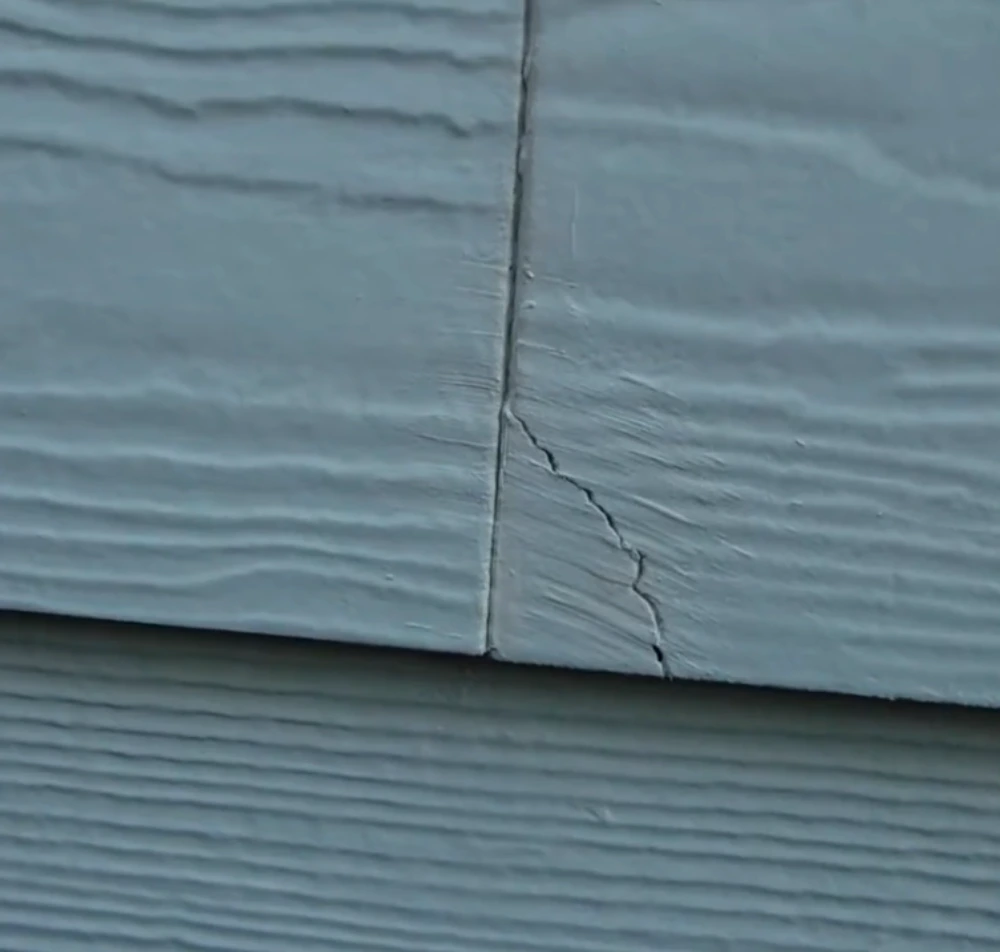
Fiber cement holds up to hail noticeably better than vinyl — it’s one of the material’s real strengths in this climate — but large enough hail can still crack or chip a panel. The pattern is usually distinctive once you know what you’re looking at: localized, roughly circular cracking or chipping concentrated on the storm-facing wall. That’s different from installation-related cracking, which tends to run in straight lines along nail rows or joints across multiple walls, regardless of which direction any given storm came from. Getting that distinction right on paper matters, because an adjuster needs to see damage that’s consistent with impact, not with a pre-existing installation issue that happened to be there before the storm.
Know this before anyone knocks on your door: waiving or absorbing your insurance deductible is illegal in Texas under state insurance law. If a contractor offers to do this to win your business, that’s a serious red flag for insurance fraud, and it can void your claim entirely (see our FAQ on storm and insurance for more). For the full claim timeline, deductible math, and what adjusters look for, read our guide to hail damage and insurance in Texas. We document damage the way adjusters expect it documented — we never touch your deductible. That’s between you and your insurer, full stop.
If You Suspect Storm Damage
What to do in order, starting today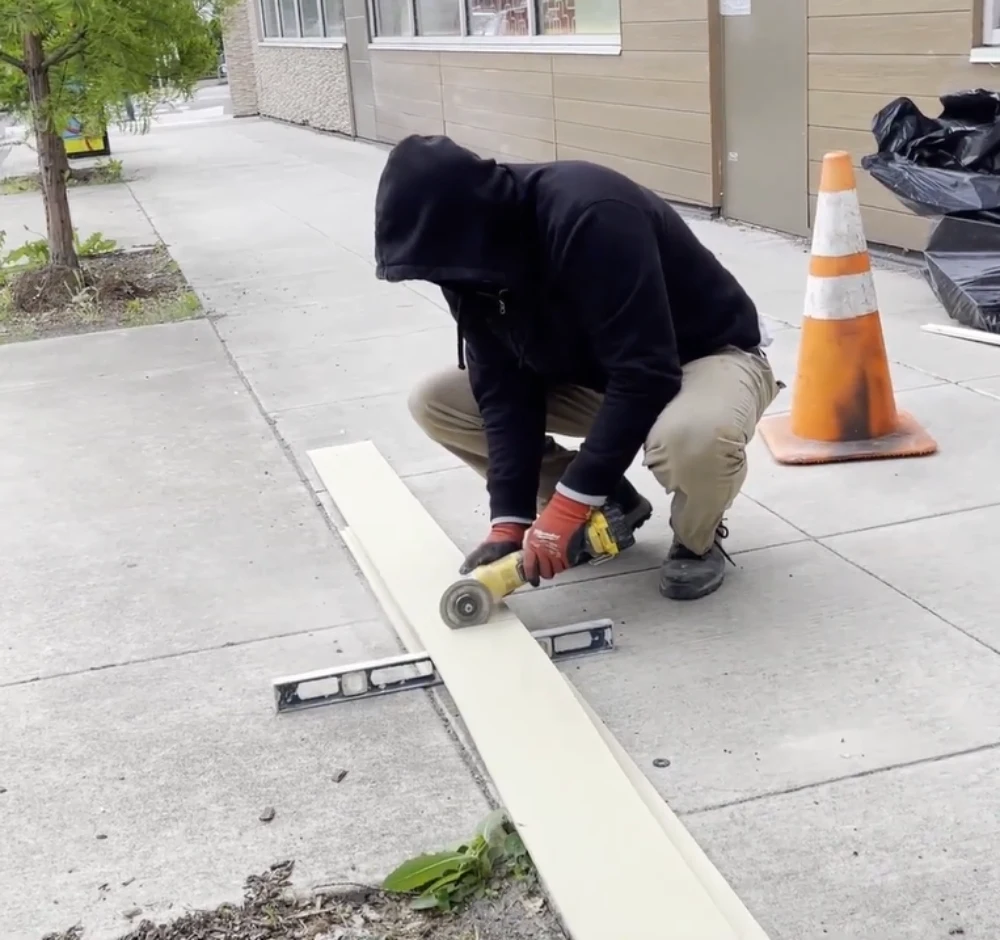
From Storm to Repaired Wall: How This Actually Goes
Whether you’re filing a claim or paying out of pocket, the process looks roughly the same.
Priority Inspection
Storm damage calls get priority scheduling during active severe weather weeks, since volume across the area spikes fast after a significant hailstorm.
Documentation Package
Size, location, and count of every affected board, photographed and dated in the format your insurer’s adjuster expects to review.
Claim Support (If Filing)
We don’t file your claim for you or negotiate on your behalf, but we’re happy to be present during your adjuster’s inspection with our documentation in hand.
Repair, Not Automatic Replacement
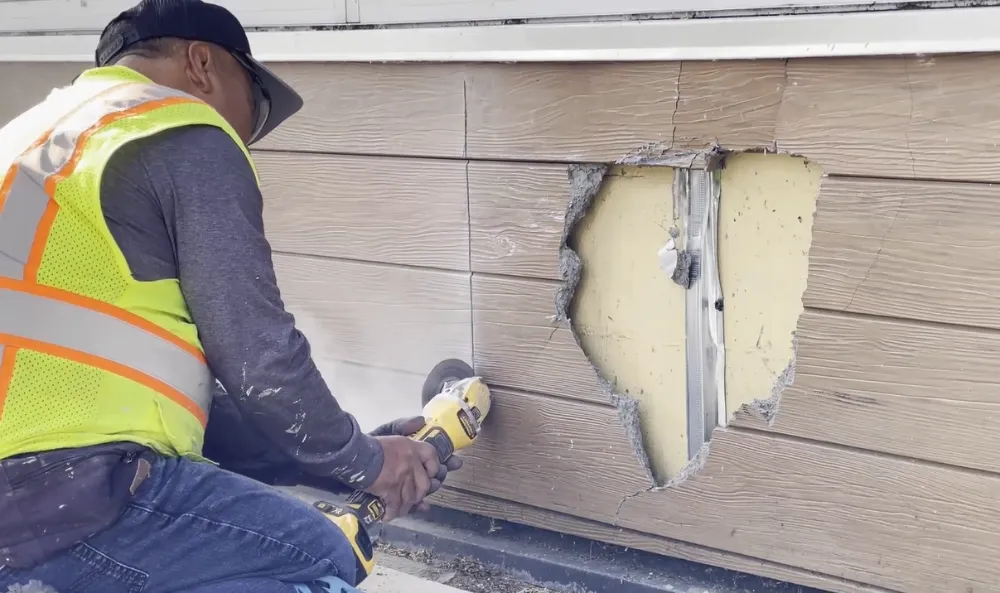
If 14 boards need replacing, we replace 14 boards. A single storm rarely means the whole wall needs to come off.
What Your Documentation Package Includes
Real Questions From Homeowners After a Storm
“Our adjuster only approved partial repair. Is that normal?”
It happens, and it’s worth a second look before accepting it. Adjusters sometimes assess visible damage on the elevation they can see easily without fully accounting for cracking on other walls, or apply depreciation that doesn’t reflect the actual repair scope. An independent, photographed inspection gives you documentation to request a supplement if damage extends further than what was initially approved.
“A contractor showed up the day after the storm and offered to handle everything, including our deductible. Should we go with them?”
No — walk away from that specific offer. Waiving your deductible is illegal in Texas, and a contractor offering it upfront, unprompted, is telling you something about how they operate before you’ve even shaken hands. Get a second opinion from someone who isn’t leading with an illegal incentive.
“How do we know if the damage is even worth filing a claim over?”
That depends on your deductible versus the actual repair cost, which is exactly why we document everything before you decide anything. If the damage is a handful of boards and the cost is close to or below your deductible, filing might not make sense — we’ll tell you that honestly rather than push you toward a claim that doesn’t benefit you.
“It’s been a few weeks since the storm and we didn’t notice damage right away. Is it too late?”
Usually not, but don’t wait longer. Most Texas homeowner policies require filing within one year of the storm date, though terms vary by carrier — and the longer damage sits, the more it can be argued that some of it is unrelated wear rather than storm-caused. An inspection now, even weeks out, still gives you a real record.
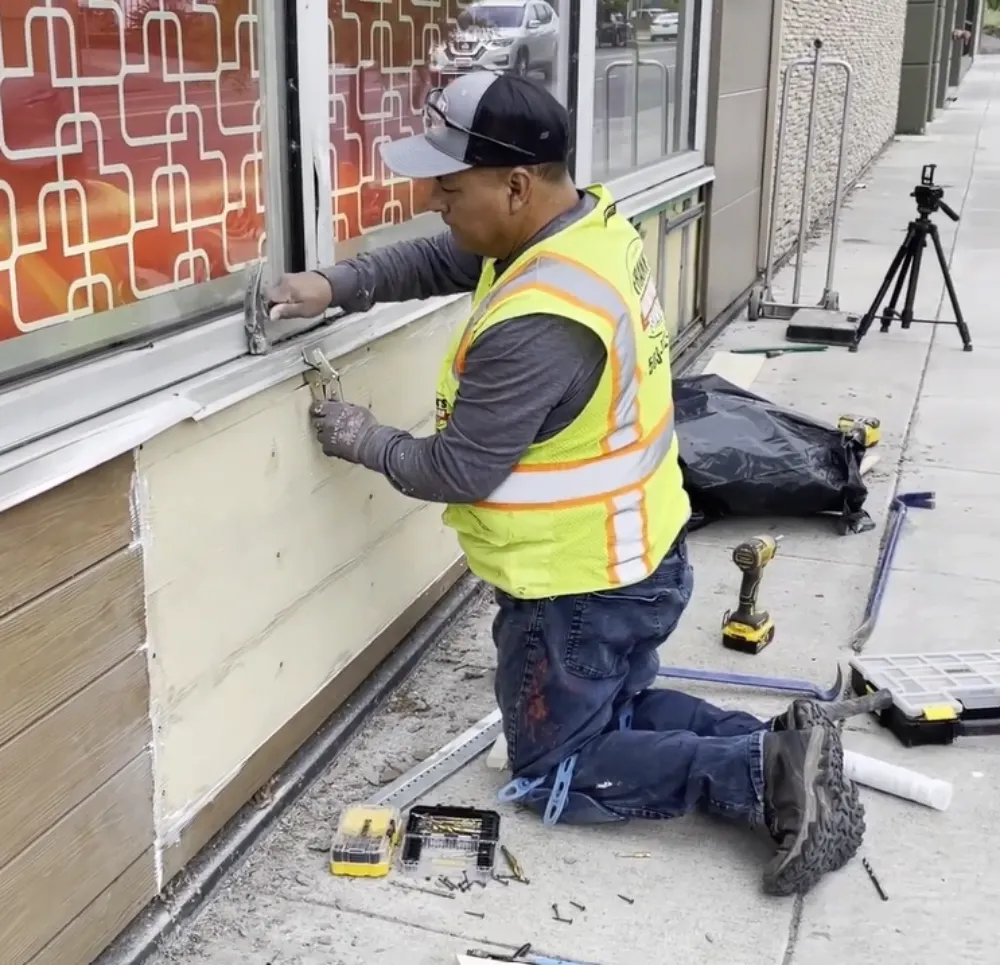
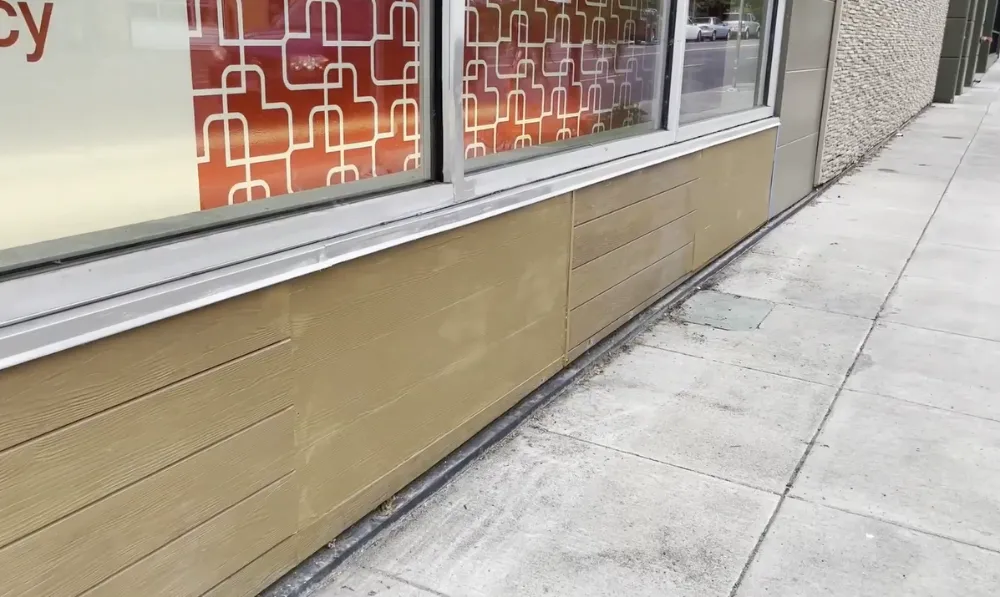
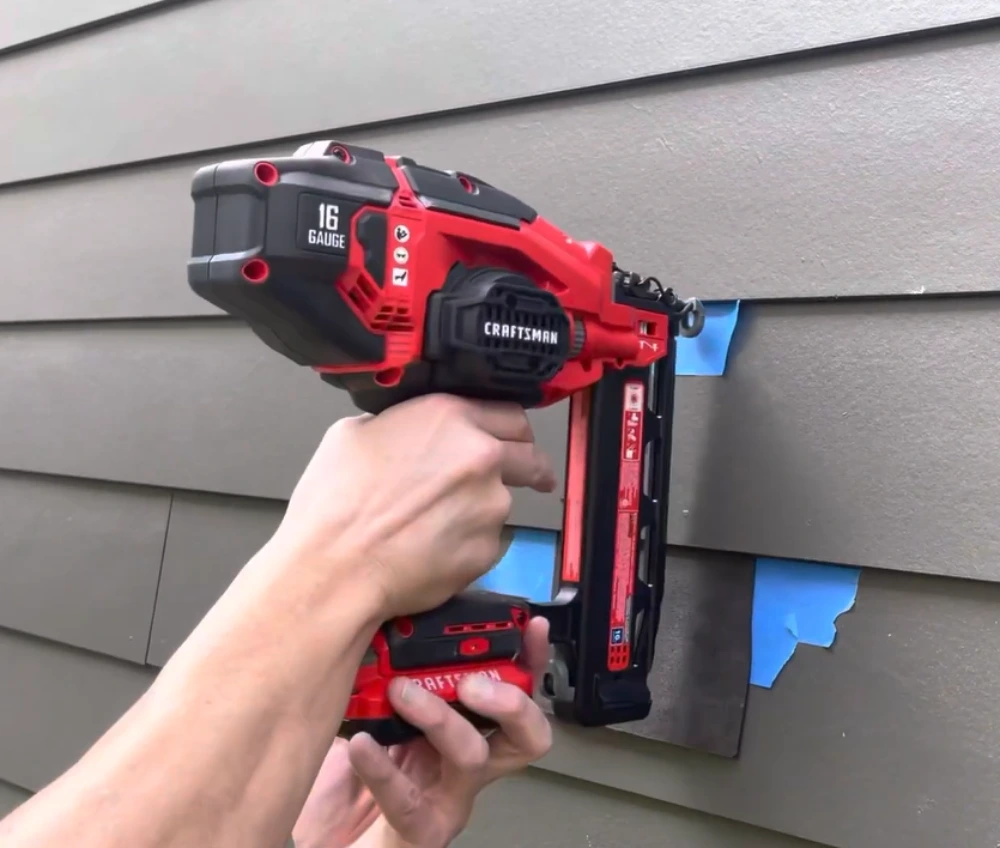
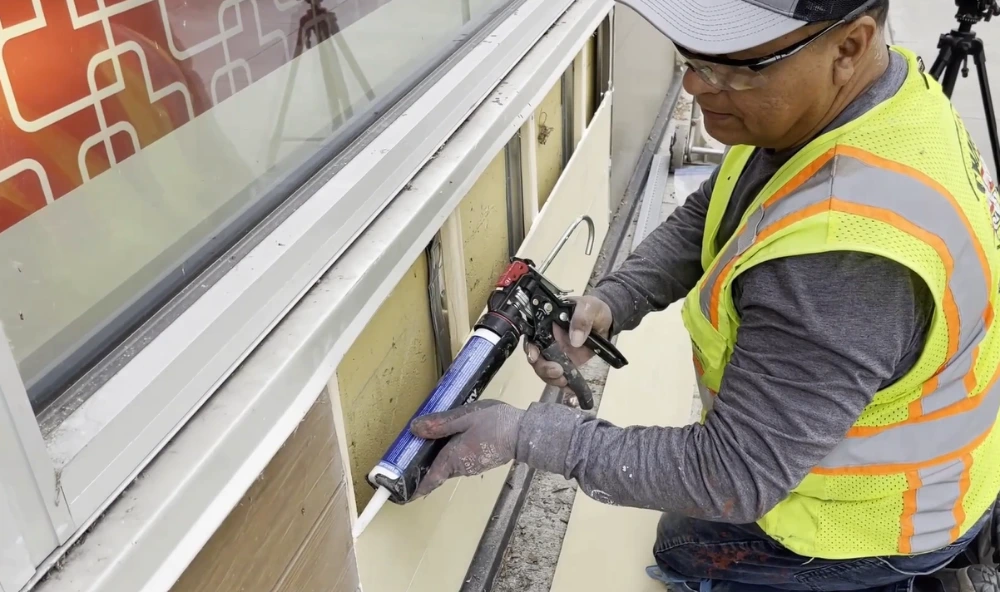
Storm Damage Repairs We’ve Handled
Frequently Asked Questions
Does insurance cover hail damage to siding in Texas?
Generally yes, if the damage is functional rather than purely cosmetic, and if you file within your policy’s deadline — most Texas policies require filing within one year of the storm date, though terms vary by carrier. Say “I need to open a claim” to your adjuster rather than “is this covered?” — the first triggers a straightforward review.
How fast can you respond after a storm?
Storm damage inspections get priority scheduling during active severe weather weeks. Most single-storm repairs are completed in a single day once approved or authorized; larger-scope damage gets a specific timeline after inspection.
What does storm repair cost?
Priced per board or per section, not by whole-house rates — in most single-storm cases it’s a fraction of a full re-side. If your policy covers the damage, your out-of-pocket cost is your deductible plus anything beyond what insurance approves.
Can you tell the difference between hail damage and installation problems?
Generally yes. Hail impact tends to be localized and roughly circular, concentrated on the storm-facing wall. Installation-related cracking runs in straight lines along nail rows or joints across multiple boards, regardless of storm direction. We document which pattern we’re seeing as part of every inspection.
Do I need to be present during the adjuster’s visit?
Not strictly required, but it helps. We’re happy to be there with you, documentation in hand, so nothing gets missed or under-assessed on the spot.
What if I want to pay out of pocket instead of filing a claim?
Completely fine — plenty of homeowners do this when the damage is close to their deductible anyway. We quote it the same either way and you decide what makes sense for your situation.
“A storm-chaser crew knocked on our door the same week offering to waive our deductible. Something felt off so we called around instead. These guys explained why that offer was illegal, documented everything properly, and our actual adjuster approved the claim without any back and forth.”
Storm Response Line
Free inspection, documented the way your adjuster needs to see it — call before you sign anything with anyone else.
Call (888) 507-2627